



Shaun Groom traces his profession journey from driving and repairing subject bikes on Northfolk farmyards to main the UK operation of the family-owned Italian OEM, Merlo
From successful BMW Apprentice of the Yr in 1993, to transport refurbished telehandlers to New Zealand’s movie business within the 2000s, Shaun Groom’s profession has been outlined by an everlasting fascination with engines – and now, more and more, with what may substitute them.
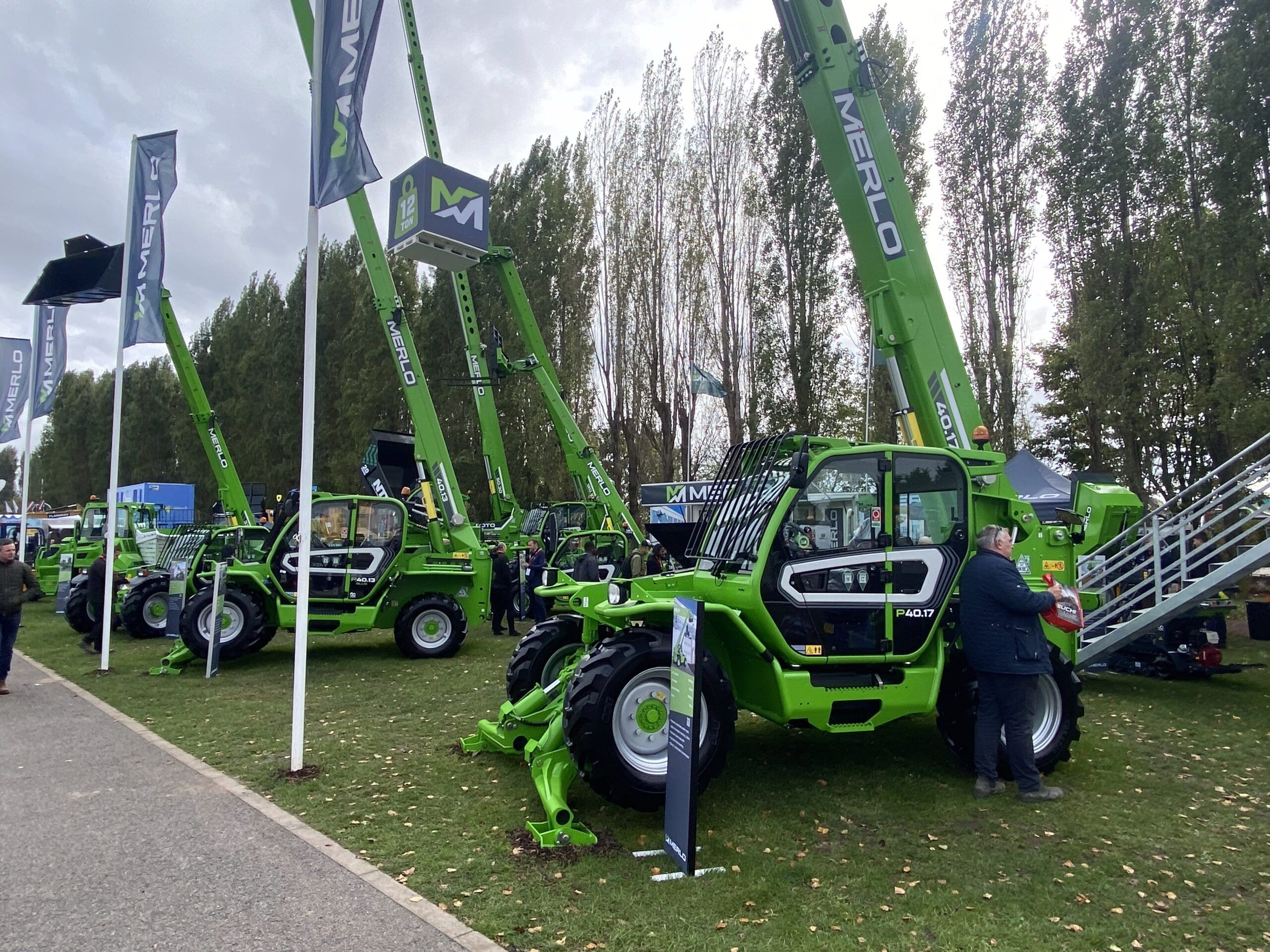
We meet Groom on the Merlo stand on the PlantWorx building expo in Newark, UK, grabbing a cup of espresso in amongst the OEM’s distinct green-liveried automobiles, with music from the stand’s demo space offering an upbeat soundtrack to our chat.
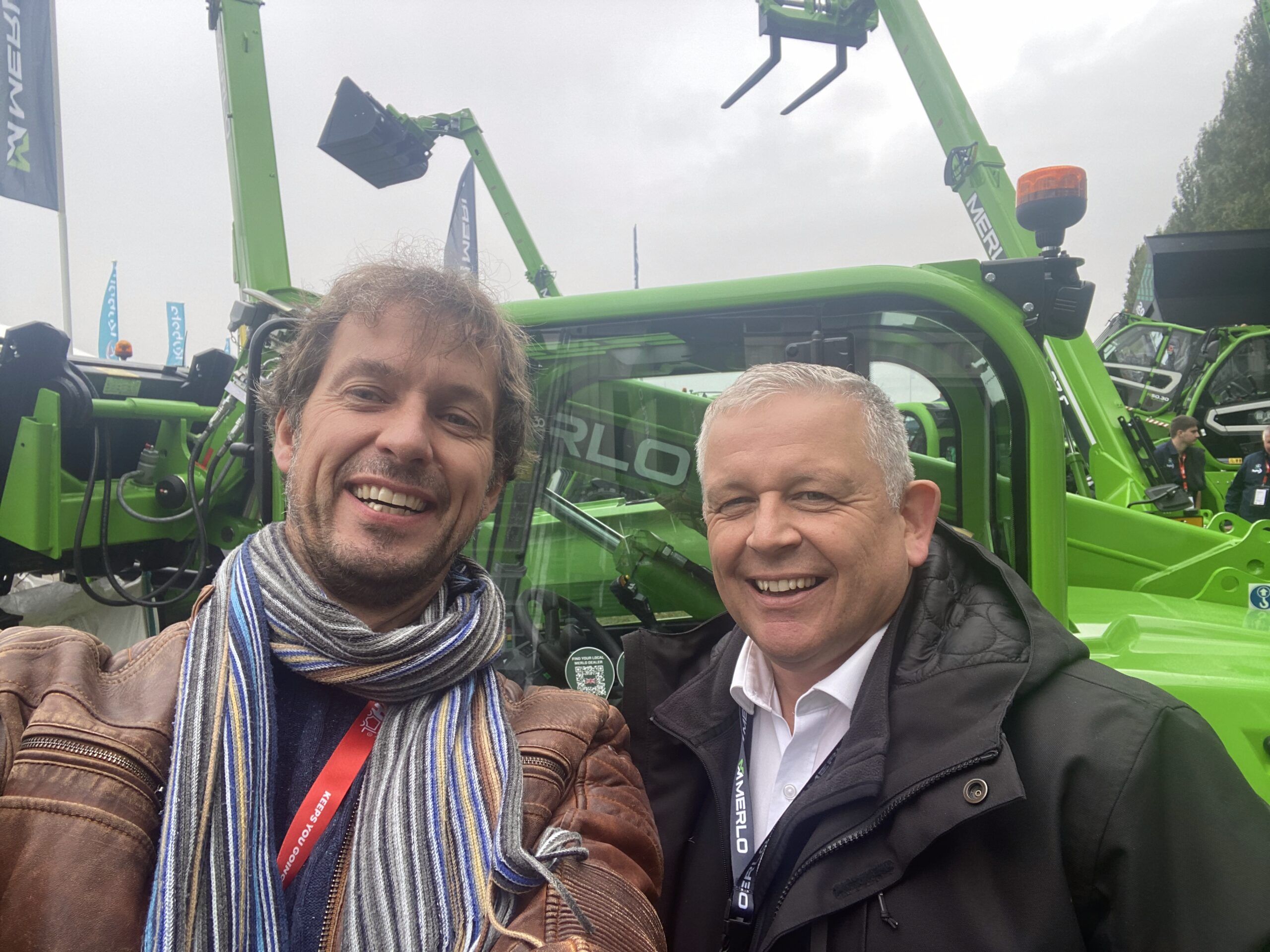
“My household background was in plant rent and agriculture,” Groom tells us. “I grew up in rural Norfolk, and something with an engine fascinated me as a baby. So I had subject bikes and I had automobiles earlier than I may drive formally, and I’d all the time labored on them.”
That early ardour led him to a BMW dealership for his apprenticeship, the place he turned one of many producer’s high apprentices and earned a visit to Germany. “BMW have been one of many pioneers of CANbus expertise,” says Groom. “So, we have been utilizing multiplex-type wiring again within the late 80s, early 90s.” He even drove a hydrogen-powered BMW 7 Collection in 1993. “I bear in mind the boot was fully full of the tank!”
However in 1995, Groom left the automobile world for agricultural equipment. After working for varied sellers within the UK, he spent three years in New Zealand within the early 2000s, the place he first encountered Merlo telehandlers by way of an Irish acquaintance on the OEM.
When Groom returned from New Zealand, his deliberate employment fell by way of, resulting in an entrepreneurial enterprise exporting used Merlo telehandlers to New Zealand principally to be used in lighting rigs for the movie business, which was booming off the again of The Lord of the Rings blockbusters.
“Merlo on the time couldn’t produce sufficient new machines,” says Groom. “I used to be sourcing very tidy used machines in Germany, refurbishing them to a excessive customary, and transport them to New Zealand.”
Nonetheless, unpredictable revenues from his enterprise led Groom to hunt everlasting employment. Consequently, he spent the subsequent 15 years with an Austrian agricultural implement producer Pottinger, rising from product specialist to managing director within the UK.
Extra lately, Merlo got here calling. “I had recognized the enterprise for a very long time and had a number of respect for the product and the household,” says Groom. “I used to be glad in my job, however I noticed a number of alternatives at Merlo, and potential challenges, which I thrive on.”
Constructing from inside
After almost 5 years into his tenure as normal supervisor at Merlo UK, Groom has a deep understanding of the strengths of the machines and emphasises the Italian producer’s distinctive method to manufacturing. “Usually, we’re making round 92% of the elements ourselves in home,” he says. “And that’s essential for the enterprise. It was confirmed to be a great technique in the previous couple of years with supply-chain challenges – it put us in a powerful place.”
“I grew up in rural Norfolk, and something with an engine fascinated me”
The corporate serves each agricultural and building sectors, with delicate however essential variations between machines for every market. “In agriculture, the machines are usually used extra intensively,” says Groom. “On a livestock operation, a machine is being utilized in extra of 1,000 hours a yr. In a typical building utility it’s 500 hours a yr.”
Agricultural machines additionally face harsher situations. “Whether or not it’s slurry, fertilizer, water or mud, the machines are inclined to work in excessive situations,” he says. “Whereas in building, you’re usually engaged on concrete yards.”
Subsequently, Merlo’s agricultural telehandlers have extra highly effective engines to ship the mandatory additional capability required. Nonetheless, building fashions have better attain – as much as 35m in rotating variations, whereas agricultural machines sometimes max out round 11m, as the very best work they’re normally do is stacking straw bales.
The electrical query
Standing beside Merlo’s eWorker at PlantWorx, Groom discusses the corporate’s transfer into electrification with the pragmatism of somebody who’s spent a long time round engines. The eWorker, which is available in twoor four-wheel drive variations, has confirmed notably profitable in agriculture. Groom believes an enormous motive for that is stress from retailers and shoppers. “There’s a number of transparency within the meals provide chain,” says Groom. “Supermarkets are actually seeking to farmers to reveal their inexperienced credentials.”
“The largest challenges I see are within the manufacturing, availability, distribution and storage of other fuels”
The four-wheel drive eWorker is powered utilizing both lead-acid or lithium batteries produced be fellow Italian agency FAAM. It makes use of 4 electrical motors – one on every entrance wheel hub and one on the axle on the rear – plus a fifth motor driving all of the hydraulics. This yr, the machine earned a gold medal from the Royal Highland Agricultural Society of Scotland, a key a part of which was based mostly on suggestions from operators within the subject.
“We’ve obtained them not solely in farms in Scotland but additionally in a whisky distillery,” says Groom. “The enchantment for them isn’t any fumes or combustion, as a result of certainly one of their massive considerations is fireplace danger.”
Apparently, over 90% of eWorker gross sales are lead-acid batteries somewhat than lithium. “Quite a lot of that comes all the way down to end-of-life,” he says. “With lead acid, it’s a completely recyclable product. With lithium you possibly can get rid of it, however technically there’s nonetheless no restoration course of.”
There’s additionally current data to leverage. “The lifttruck business has used lead-acid for years,” says Groom. “We’re promoting these into locations the place they’ve had lift-trucks. In order that they’re acquainted with lead acid. They’ve obtained the charging gear.”
Rental resistance
Whereas agriculture has embraced electrical telehandlers, the development rental sector has been slower. “Renters are usually not ready to pay a premium for electrical,” says Groom. “They count on to hire an electrical machine for a similar value as a diesel, or probably much less, as a result of they imagine they’re taking a danger.”
This frustrates him, given the expertise’s maturity. “My views are a bit of totally different – it’s really extra of a recognized amount,” he says. “Electrical propulsion has been round for years. Milk was delivered to just about each residence within the UK by electrical propulsion 50 years in the past.”
He additionally attracts on his father’s profession in heavy plant upkeep for perspective. He labored on huge electrical draglines and face shovels in opencast mines. “These large machines transfer hundreds of tons of soil a day utilizing electrical energy,” says Groom. “It was essentially the most environment friendly solution to do it. The quantity of diesel required to propel these machines could be phenomenal and tough to get to that space.”
The infrastructure hole
Trying forward, Groom sees the way forward for zero-emission equipment as nonetheless unclear: “The consensus is blended, whether or not it’s electrical, methane or hydrogen. These artificial fuels are clearly in growth.”
Merlo works with 4 engine OEM companions – Perkins, FPT, Deutz, and Rehlko (previously Kohler) – all creating various fuels. “It’s obtained to be commercially viable, it’s obtained to be sensible,” says Groom. “The largest challenges I see are within the manufacturing, availability, distribution and storage of other fuels. With an electrical machine we all know the place we will cost it,” he says. “That may’t presently be stated for various fuels.”
For transition to succeed, he believes, governments should act. “There must be motivation and drive from governments to make it occur,” he says, “They’ve obtained to put money into infrastructure to help the transition. We’ve had decade upon decade of inner combustion engines – if we’re going to see any type of transition, there additionally must be monetary incentives within the type of tax aid or direct subsidies.”
Standing beside machines representing each Merlo’s electrical and diesel ranges, Groom embodies the business’s bridging technology – engineers comfy with each combustion and electrons, formed by hands-on mechanical roots however navigating in the direction of a zero-emission future. “It’s all the time been ‘something with an engine’ for me,” he says. “However, in actual fact, not all of them have engines anymore.”
This text first appeared within the October problem of iVT
